
Defeat Anime RNG Tier List Calculator: Rank Your Own Units
A tier list for the units you actually pulled: band them S to D from their real damage, attack speed and crit, then compare any two.
FAQ
Is there a Defeat Anime RNG tier list?
Why rank against my own units instead of the whole game?
Which of the units you pulled deserves your resources?
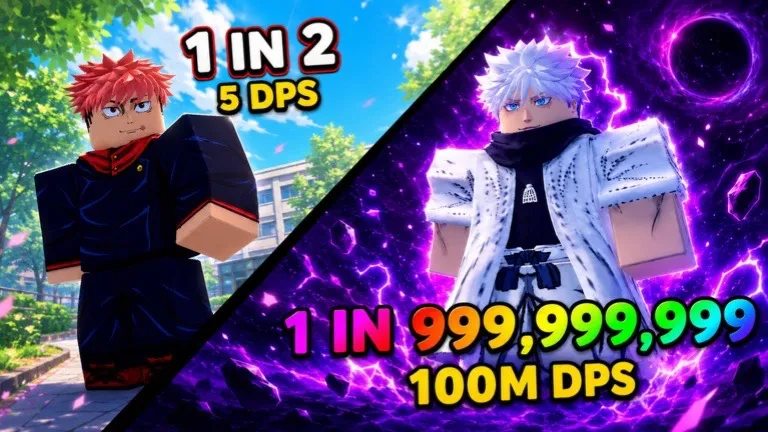
Enter what you actually rolled. The calculator estimates each unit’s single-target damage rate, then bands them S to D against the strongest unit in your own list.
Why rank against your own roster instead of the whole game?
Because in an RNG game you do not choose your units, you roll them. A published tier list answers “what is the strongest unit in the game”, and most of that answer concerns units you do not own. The question you can act on today is narrower: of the ones sitting in your inventory right now, which gets the next upgrade?
Ranking relative to your own best unit answers that directly, and it keeps this page honest. We have not established a verified roster for this game, so we do not publish one. Nothing in the table above comes from us: every number is one you read off your own screen.
The bands are S at 80% of your best unit’s estimated damage rate, then A at 55%, B at 35%, C at 15%, and D below that. Those cut-offs are our presentation choice, not a game rule. A unit’s band moves when you pull something stronger, which is the intended behaviour rather than a flaw.
What the ranking deliberately leaves out
Estimated DPS is single-target damage and nothing else. A unit that ranks lower here can still clear a wave faster if it hits several enemies at once, reaches further, controls a crowd or strengthens the rest of your team. Cost and availability matter too. Read the table as one input to the decision, then watch an actual battle under conditions you can repeat.
Merge level, traits and mutations are not separate inputs, because they act through the stats you already enter: a merged or mutated unit shows different damage and timing on its own card, and those are the numbers to type in. Record them after the upgrade, not before.
Comparing just two units
When you only need a head-to-head, this shorter form does the same arithmetic for a pair.
How do you enter comparable values?
Use both units’ stats from the same game version and comparable upgrade states. Damage per hit is not the same quantity as a displayed DPS value. If the game gives only DPS, do not put that number into the damage-per-hit field and divide it again.
Attack interval is the number of seconds between attacks: an interval of 2 means one attack every two seconds. For critical chance, enter a percentage. The critical multiplier is the total critical-hit damage divided by ordinary-hit damage. A multiplier of 2 means double damage, not an extra 200%.
Set critical chance to zero when it is absent or unknown rather than assuming an undocumented bonus. The default values are demonstration inputs, not real character statistics.
What formula is used?
Estimated damage rate is damage ÷ interval × [1 + critical chance × (critical multiplier − 1)] × uptime, with percentages converted to fractions. Uptime is a user-entered estimate of how much of the session the unit can actually attack.
A hypothetical 100 damage every two seconds, 20% critical chance, double-damage critical hits and full uptime produces an expected 60 DPS. The calculator computes an average damage rate, not the exact damage in every short fight.
How does this fit into a tier list?
A unit with lower single-target DPS might still offer useful crowd control, support, range or area attacks. Cost and accessibility can also affect a team decision. Those are separate comparisons, not hidden bonuses added to this calculator.
The labels A and B are deliberately generic: we have not established a complete current roster or assigned unverified character values. Treat the output as one input to your decision, then observe actual battles under repeatable conditions. To turn a set of these comparisons into a ranking of the units you own, follow the five-step method in how to rank and merge your units. Before there is a unit to compare, the roll odds calculator covers how many attempts one tends to take, and Trait Shards covers the currency that changes its stats afterwards.
What are the model’s limits?
The formula assumes the entered rate and critical behavior describe the attack being compared. It does not handle every possible multi-hit skill, animation cancel, cap, immunity or damage-over-time interaction. If an ability behaves differently, use a model that represents it instead of forcing a misleading number into this form.
Method and privacy
Calculations run on your device. Inputs are not submitted to Roblox or to a DAR Guide server. The mathematical examples and input validation are covered by automated tests, while any game stats you enter remain your own observations.
Related pages
Related Articles
Was this helpful?
Thanks for the feedback!